Concreting guide
Is there a best time of year to pour concrete in Southeast Queensland?
Autumn and early winter are the best times to pour concrete in Southeast Queensland. Roughly April through August gives you the most predictable temperatures, lower humidity, and far less chance of an afternoon storm rolling in and wrecking a fresh pour. That said, good concrete can be placed year-round here if you understand what the Brisbane climate is actually doing to your mix and plan around it.
Why Temperature and Humidity Matter More Than You Think
Concrete doesn't "dry" - it cures. Curing is a chemical reaction between water and cement called hydration, and it is sensitive to heat and moisture loss. When the ambient temperature climbs above about 30°C, that reaction accelerates unevenly. The surface can set faster than the core, which creates internal stress and increases the risk of cracking. Below about 10°C (rare in Brisbane, but it happens on winter mornings out west), hydration slows down and strength gain stalls.
In Southeast Queensland, our problem is almost always on the hot end. Morningside and the Inner East suburbs routinely see 30 to 35°C days from November through March, and relative humidity swings wildly. High humidity on a hot afternoon sounds like it would help keep concrete moist, but what it actually does is slow surface evaporation unpredictably, which makes it harder to time the finishing correctly.
The ideal concrete curing temperature is typically between 15°C and 25°C. That range describes a Brisbane autumn morning almost perfectly.
The Four Seasons, Honestly Assessed
Autumn (March to May): The standout window. Temperatures drop into a manageable range, the wet season is winding up, and afternoon storms become less frequent. March can still throw a surprise downpour, so late April and May are generally the most reliable weeks. If you are planning a driveway, garage slab, or alfresco pour and you have any flexibility at all, aim here.

Winter (June to August): Nearly as good. June and July are the driest months in Brisbane on average, and daytime highs in the mid-20s are almost ideal for curing. The one watch-out is overnight lows - some inland parts of the Brisbane basin can dip to 8 or 9°C. For jobs in Tingalpa or Murarrie where the block sits lower and colder air pools, an experienced concretor will sometimes use curing blankets or adjust the mix to manage slower early-strength gain.
Spring (September to November): Workable but increasingly risky as the season progresses. September is often fine. By October and November, you are gambling with afternoon storm season. Spring also brings the jacaranda and pollen drop, which sounds irrelevant until you are trying to finish a decorative concrete surface and debris is landing in it every 20 minutes.
Summer (December to February): The most challenging. Not impossible, but it requires deliberate management. Hot days mean rapid moisture loss from the surface, which leads to plastic shrinkage cracking before the concrete has any real strength. Good concretors will schedule early morning pours (sometimes starting before 6am), use chilled mix water or ice in the batch, add a set-retarding admixture, and have extra finishers on site to keep pace with the faster surface set. All of that adds cost and complexity. A $5,000 alfresco slab becomes a more stressful and expensive job in January than it would be in May.
What Brisbane's Wet Season Actually Does to a Pour
Southeast Queensland's wet season runs roughly November through March. The risk isn't ongoing rain during a pour - any concretor worth hiring will simply not commence a pour with active rain on the radar. The real problem is unpredictability. A job scheduled for a clear Tuesday in December can be disrupted by a cell that wasn't in the morning forecast. Once concrete is placed and being floated, even 15 minutes of rain can damage the surface permanently.
For homeowners in Inner East suburbs like Hawthorne, Bulimba, and Norman Park, where Queenslander renovations and backyard upgrades are common, this matters because outdoor pours - pool surrounds, alfresco pads, garden pathways - have no overhead protection. A covered carport slab has a little more flexibility; an exposed concrete driveway does not.
We watch the Bureau of Meteorology radar closely and will reschedule when conditions look marginal. That is not unusual or a problem; it is just how responsible concreting works in Brisbane.
Timing Around Your Block and Your Project Type
The season is one variable. Your specific block adds another layer.

Sloped blocks in Balmoral and Cannon Hill often need retaining wall footings and base pours before any slab work can start. Footings are smaller pours, more forgiving, but they still need to achieve adequate strength before loads are placed on them. In cooler months, that strength gain is reliable and well-timed. In summer, the concrete reaches design strength faster on paper, but the higher cracking risk during the early hours can undermine that.
For shed and garage slabs, the pour is typically thicker and the job is less time-critical than a decorative finish. These are more forgiving of imperfect conditions. For pool surrounds, where a broom or exposed aggregate finish is common and the final appearance matters, weather conditions directly affect the quality of the result. We prefer to schedule pool surrounds and decorative alfresco work in autumn and winter for exactly this reason.
If your project involves a new concrete driveway with a coloured or stencilled finish, surface quality is everything. A rushed summer pour in direct sun, even with admixtures and early starts, carries more risk of a patchy or inconsistent finish than the same job done in May.
Can You Do Anything to Improve Summer or Spring Conditions?
Yes, to a degree. An experienced concretor has a few practical tools:
- Shade and wind breaks. Temporary shade cloth or barriers can reduce direct sun on fresh concrete and slow surface evaporation.
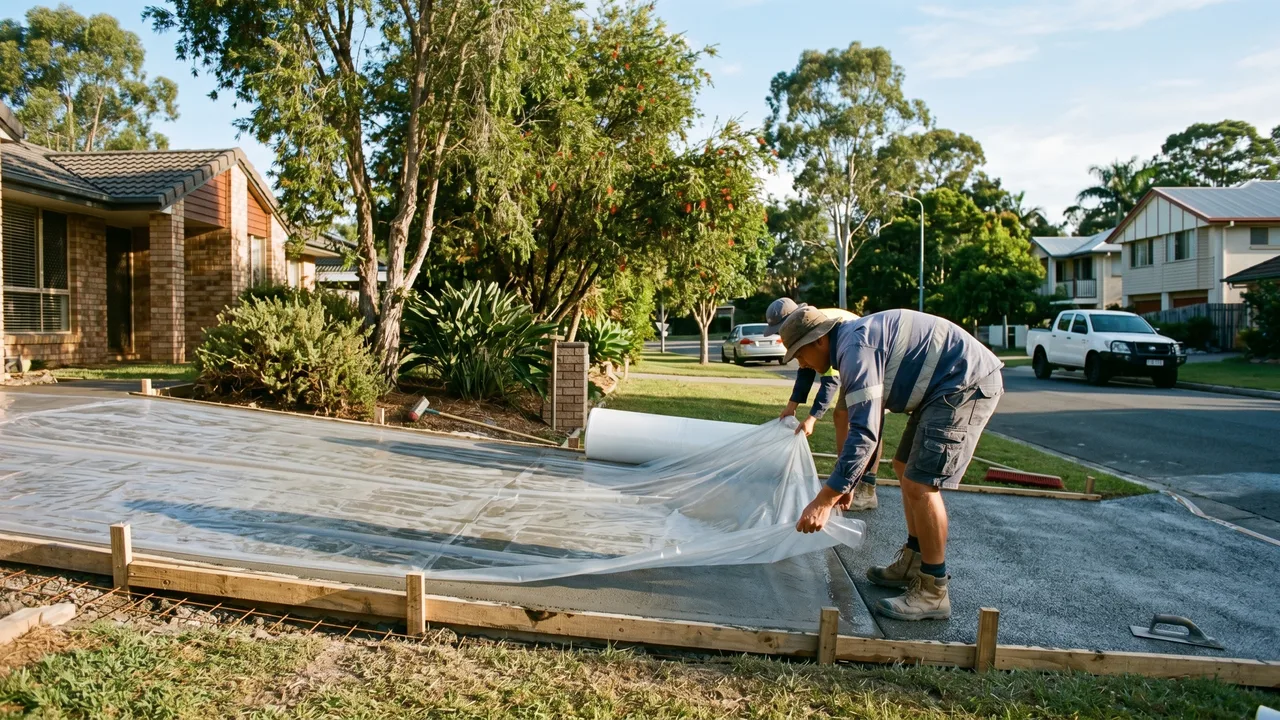
- Curing compounds. A spray-applied membrane helps retain surface moisture after finishing is done.
- Admixtures. Set retarders give finishers more time; some mixes use a lower water-to-cement ratio to reduce bleed water on hot days.
- Timing the pour. Starting at first light keeps the critical finishing window in cooler morning temperatures.
None of these eliminate the challenges. They manage them. A concretor who tells you summer pours are no problem at all, no adjustments needed, is either very confident or not being straight with you.
A Practical Recommendation
If you are planning a concrete job anywhere in the Morningside, Hawthorne, Bulimba, Balmoral, Norman Park, Cannon Hill, Murarrie, or Tingalpa area, and you have some flexibility on timing, aim for May through July. You will get more predictable results, the job is less physically gruelling for the crew (which genuinely affects quality), and there is less chance of a weather delay disrupting your schedule.
If your project is time-sensitive - a garage slab needed before a renovation starts, a driveway before a property goes to market - do not let the season stop you. Just use a concretor who understands the Brisbane climate, adjusts their approach accordingly, and will be honest with you if a postponement is the smarter call.
We are happy to talk through timing for any job we quote. There is no obligation, and if the honest answer is "wait six weeks," we'll say that.
Quick answers